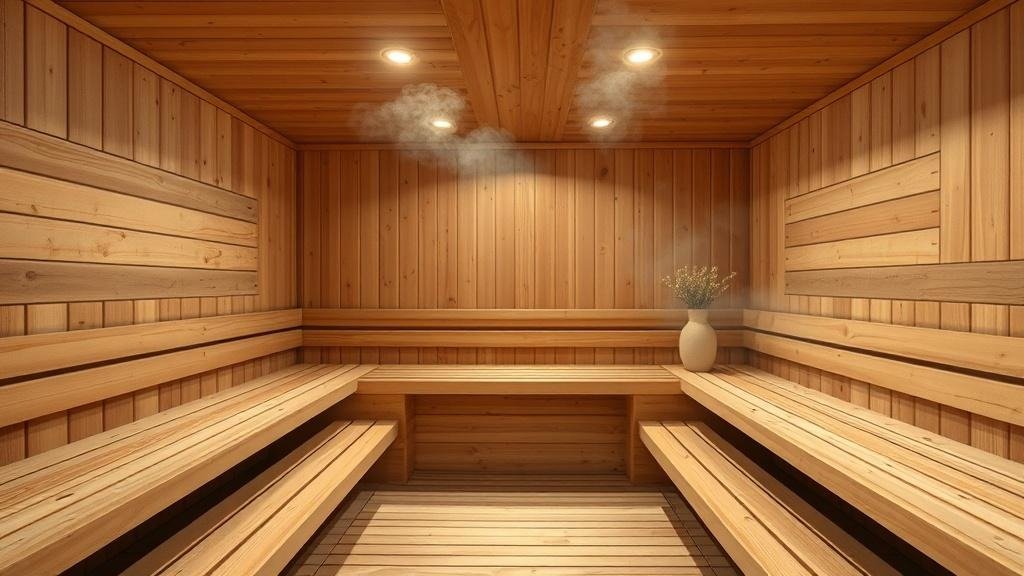
The right way to judge this outdoor sauna heater supplier is by how it will feel, fit, and hold up after the first month. Heat performance, electrical planning, materials, maintenance, and actual user habits matter more than showroom language.
Last October a friend in northern Minnesota walked me through his backyard build: a 6×8 cedar cabin sitting on a concrete pad he’d poured himself, heated by a Harvia Virta 6 kW unit wired into a 40-amp dedicated circuit. He’d been using it four or five times a week since March. “I spent $7,200 all in,” he told me, pulling open the glass door to show the stones steaming at 185°F. “Best money I ever spent on this house, and that includes the kitchen.” Then he pointed at the original heater he’d returned, a 4.5 kW model that couldn’t keep up with the cabin volume in a Minnesota January. That swap cost him three weeks and a restocking fee. The boring truth about sauna heaters is that the unit itself is the easy part. Getting the match right between heater output, cabin volume, site prep, and your local electrical code is where projects either feel effortless or turn into expensive headaches.
The Spec Sheet Stuff That Actually Matters
Most product pages throw a wall of numbers at you. Here’s what to focus on and what to skip.
Kilowatt rating and circuit requirements. Residential sauna heaters in the Harvia, HUUM, Tylo, and Saaku lineups range from 4.5 kW (240V, 20 to 30 amp) up to 9 kW (240V, 40 to 50 amp). The number you care about is the manufacturer’s published room-volume chart. A 4.5 kW heater matched to a 200-cubic-foot cabin works beautifully. The same heater trying to push a 350-cubic-foot cabin runs nonstop, burns out elements early, and never quite gets to temperature. Oversized units have the opposite problem: they cycle hard, waste electricity, and can overshoot.
Stone capacity. Ranges from about 30 to 100 pounds depending on the model. More stone mass means softer, more stable heat and better steam (löyly) when you throw water. HUUM’s DROP design holds upward of 70 pounds in a compact footprint, which is part of its appeal.
Build materials. On the cabin side, you’re looking for pre-cut tongue-and-groove cladding in western red cedar, hemlock, thermo-aspen, or redwood. Cheaper kits use butt joints sealed with felt. Those leak heat and look weathered within two seasons. Think of it like hardwood flooring versus peel-and-stick vinyl: the upfront savings evaporate once you’re living with it.
If you’re also shopping cold-plunge equipment (a lot of backyard wellness builders pair the two), check chiller HP, filtration micron rating, ozone/UV sanitation, and tub material. A 1/3 HP chiller holds 50°F in a small insulated tub in a temperate climate. It will struggle badly in a hot garage in August.
What the Research Actually Shows
Sauna advocates can get evangelical. So let’s be precise about what the science says and where the gaps are.
The landmark study is Laukkanen et al. 2015, published in JAMA Internal Medicine. It followed 2,315 middle-aged Finnish men for 20 years and found a dose-response relationship between sauna frequency and cardiovascular mortality. Men using a sauna four to seven times per week had roughly half the cardiovascular mortality of men using it once a week. That’s a striking association, but it’s observational, not a randomized trial. Finnish men who sauna daily may also walk more, drink less, and socialize differently.
A 2018 BMC Medicine follow-up from the same group reported lower dementia incidence at the highest sauna frequencies. The proposed mechanism is heat acclimation driving improved endothelial function, plus a heart-rate response that mimics moderate-intensity cardio (think brisk walking, not sprinting).
For a home user, 20-minute sessions at 170°F to 195°F, two to four times a week, is a reasonable starting protocol. Hydrate before and after. Step out if you feel lightheaded. And if you have a cardiac history, uncontrolled blood pressure, or are pregnant, talk to your physician before you start. This isn’t a hedge; it’s the same advice the Finnish Sauna Society gives.
See also: What Is a Cryptocurrency Whitepaper?
Install: The Part People Underestimate
A sauna heater project is half product, half site work. The product ships to your door. The site work is where things get real.
The pad. This comes first. A four-inch compacted gravel pad with a drainage layer works for barrel units on flat, stable ground. A four-inch reinforced concrete slab (roughly $4 to $7 per square foot installed) is the right call for cabin saunas in cold or wet climates. Skipping this step, or settling for a couple of pavers on soft soil, means a unit that shifts and cracks as the ground freezes and thaws. Fixing a settled pad after the cabin is on top of it is deeply unpleasant work.
The wiring. A 6 to 9 kW heater on a dedicated 240V circuit at 30 to 50 amps is not a weekend DIY project. A licensed electrician needs to run the circuit, size the breaker, pull the permit, and tie into your main panel. I know it’s tempting to save $800 and do it yourself. Don’t. This is how house fires start and insurance claims get denied.
Ventilation. An outdoor sauna needs an intake vent below or near the heater and an adjustable exhaust on the opposite wall near the ceiling. Indoor builds typically need a passive vent to the outside or a properly sized exhaust fan. Poor ventilation makes the air feel stale and heavy regardless of temperature.
Permits. Many counties treat detached structures under 200 square feet as exempt from building permits, but the electrical permit is almost always required because of the 240V circuit. One phone call to your local building department before you buy saves a lot of trouble after.
Real Costs, All In
The sticker price on a heater or a kit is about 60% of the actual project cost. Here’s what the full picture looks like.
On the sauna side: entry barrel kits start around $2,490. A mid-tier cabin with a quality Harvia or Tylo heater runs $6,000 to $10,000. Premium builds (panoramic glass-front, thermo-aspen cladding) land at $12,000 to $16,980. Then add $400 to $900 for a gravel pad, $1,200 to $2,400 for concrete, and $600 to $1,800 for the electrical run.
On the cold-plunge side: a residential insulated tub with an integrated chiller costs $4,500 to $7,500. Commercial-grade stainless builds with full filtration run $9,000 to $14,000. Stock-tank DIY setups are $400 to $900, but you’re buying and hauling ice bags every session, which gets old fast.
Resale value. Appraisers won’t give you dollar-for-dollar credit, but a well-built outdoor wellness setup is treated as a selling feature in Northeast and Pacific Northwest markets. Think of it like a quality deck or a fire pit area: it won’t double your equity, but it makes your listing more attractive.
HSA/FSA eligibility. A residential sauna is rarely HSA or FSA eligible unless a clinician issues a Letter of Medical Necessity for a documented condition. Eligibility is patient-specific. Talk to your tax advisor before you assume the purchase qualifies.
Picking Between Heater Types (and Why “Best” Is the Wrong Question)
The Harvia vs. HUUM vs. Tylo debate fills forum threads for pages. Here’s my honest take: any of the three will heat your cabin properly if it’s sized correctly for the room volume. The differences are aesthetic preference, stone capacity, control interface, and price.
Harvia has the widest model range and the most accessible price points. It’s the Honda Civic of sauna heaters. That’s a compliment. HUUM’s DROP is a conversation piece with its open stone column and holds a lot of mass for its footprint, but you’ll pay a premium for it. Tylo builds are clean Scandinavian design with precise controls and strong build quality, popular in commercial installs.
The real choice isn’t between brands. It’s between traditional electric and wood-burning (best for rural or off-grid setups where the stove operates independently and power outages don’t interrupt your routine) versus infrared panels, which run at lower temperatures (120°F to 150°F), plug into a standard outlet, but produce a different physiological response.
For comparing actual model lineups, price tiers, and installation specs side by side, the fuller resource I keep coming back to is this outdoor sauna heater supplier. It’s worth bookmarking before you commit to a build.
When to Call a Pro (Not Negotiable)
Three moments where spending money on a professional saves you money, safety, or both:
Electrician. Any time a 240V circuit is involved. Full stop. That covers most traditional sauna heaters and commercial-grade cold-plunge chillers.
Contractor or experienced builder. For the pad, especially in freeze-thaw climates or on soft, recently graded soil.
Physician. Before starting any heat or cold protocol if you have an arrhythmia, uncontrolled hypertension, a recent cardiac event, Raynaud’s phenomenon, are pregnant, or are managing any chronic condition. The Laukkanen data is encouraging for healthy adults. It is not a prescription for everyone.
FAQs
Can I install a sauna heater on a deck?
Some smaller barrel units can sit on reinforced decks if the framing supports the loaded weight (often 600 to 1,200 pounds). Most cabin-style saunas belong on a dedicated pad. Confirm load capacity with a structural engineer or contractor before placing any unit on existing decking.
How often does a sauna heater need maintenance?
Wipe down benches after each session and oil the exterior cedar or hemlock once a year. For cold plunges, replace filter cartridges every 6 to 12 weeks, run ozone or UV sanitation on schedule, and drain and refill at the manufacturer’s recommended interval.
Will my electric bill spike?
A 6 kW sauna heater running for one hour costs roughly $0.60 to $1.20 at typical US residential rates. Three 20-minute sessions per week add about $4 to $8 per month. A 1/2 HP cold-plunge chiller in steady state pulls about 350 to 450 watts and adds $8 to $15 monthly in most climates.
Is sauna use safe during pregnancy?
Pregnant adults should not start a new sauna or cold-plunge routine without explicit clearance from their OB-GYN. Core temperature changes carry real fetal risks, particularly in early pregnancy. This is a clear case where you defer to your physician, no exceptions.
How loud is a sauna heater?
A traditional electric sauna heater is silent in operation. A cold-plunge chiller runs at roughly 45 to 55 dB at one meter, comparable to a quiet conversation. Position the unit where the compressor hum won’t bother neighbors or adjacent bedrooms.
Disclaimer. This article is general consumer information, not medical advice. Heat and cold therapies carry real cardiovascular load. Anyone with arrhythmias, uncontrolled hypertension, Raynaud’s phenomenon, recent cardiac events, or who is pregnant should consult a physician before starting any new sauna or cold-plunge routine.
Any 240V electrical work should be completed by a licensed electrician under the appropriate local permit.
HSA and FSA reimbursement on wellness equipment is patient-specific and depends on a Letter of Medical Necessity from a clinician. Talk to your tax advisor before assuming a purchase qualifies.